

Beyond the Barrel: Tourism and Hospitality
Estimated Reading Time: 8 min
What Suriname’s New Oil Era Could Mean for Tourism and Hospitality
Suriname is approaching one of the most consequential economic transitions in its modern history. The GranMorgu offshore development—located approximately 150 kilometres from the coast—is expected to commence production in 2028. With an estimated investment of US$10.5 billion and a planned production capacity of 220,000 barrels per day, the project will introduce Suriname to large-scale offshore oil production.
Its effects, however, will reach considerably further than the energy sector.
The development phase is already attracting international companies, technical specialists, service providers and investors. As this activity intensifies, tourism and hospitality are likely to become important supporting sectors—accommodating business travellers, project teams, consultants, visiting executives and, eventually, a broader international audience with a growing awareness of Suriname.
The opportunity is significant, but it will require more than additional hotel rooms. Suriname will need a hospitality ecosystem capable of meeting international expectations while remaining distinctly Surinamese.
Business travel will lead the first wave
The earliest impact is likely to be seen in business travel rather than conventional leisure tourism.
Major offshore developments depend on a wide network of engineering firms, logistics companies, maritime operators, environmental specialists, professional advisers and equipment suppliers. Their personnel may visit Suriname for negotiations, inspections, training, mobilisation, project management and operational support.
This can generate demand across several accommodation categories:
- International-standard business hotels;
- Serviced apartments and extended-stay residences;
- Secure executive accommodation;
- Conference and meeting facilities;
- Short-stay housing for technical personnel;
- Airport transfer, transport and concierge services;
- Professional catering and corporate event facilities.
Unlike seasonal leisure tourism, project-related travel can produce relatively consistent occupancy and longer average stays. It may therefore improve the commercial case for upgrading existing hospitality assets and developing professionally managed new concepts.
Yet investors should distinguish between temporary construction demand and sustainable long-term demand. Projects conceived solely around a short development cycle may face pressure once staffing patterns change. The strongest hospitality propositions will be adaptable, serving energy-sector visitors today while remaining relevant to corporate, government and leisure markets over the longer term.
A higher standard of hospitality will be expected
International energy companies and their contractors often work with strict requirements concerning safety, reliability, privacy and corporate duty of care. Accommodation providers may consequently be expected to offer more than attractive rooms.
Reliable electricity and connectivity, secure parking, fire and life-safety systems, professional housekeeping, food-safety procedures, efficient reservations, flexible check-in and high-quality business facilities will increasingly influence procurement decisions.
This shift could help raise service standards throughout the sector. Independent hotels, restaurants, transport providers and property managers that professionalise early may become credible local suppliers to international organisations.
There is also an opportunity for global hotel operators and experienced regional brands. However, the market may not require only large full-service hotels. Boutique business hotels, aparthotels, branded residences and mixed-use hospitality developments could be equally relevant, particularly where they combine strong locations with flexible operating models.
Paramaribo’s urban development will matter
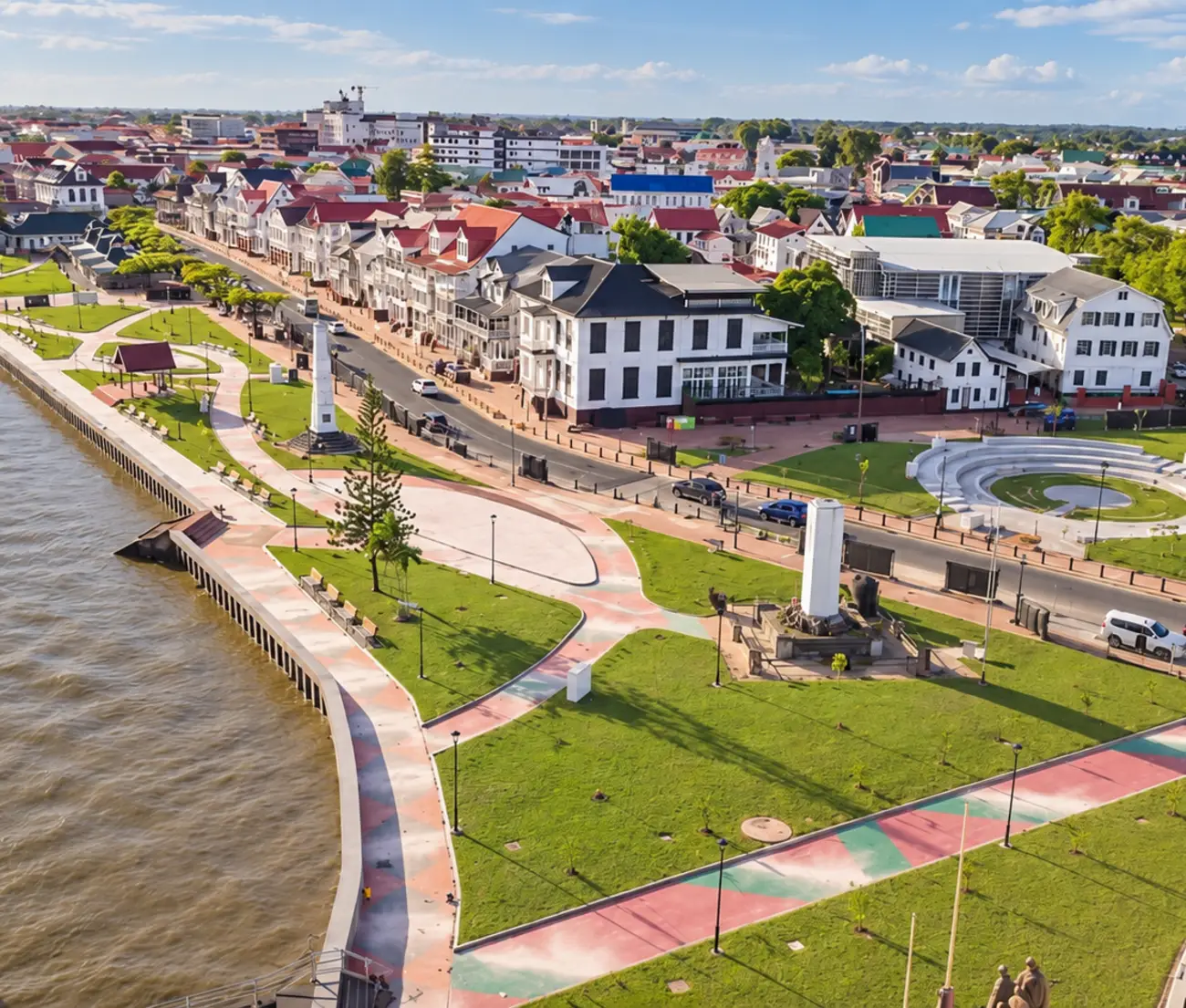
Paramaribo will remain the principal gateway for many international visitors. The city’s ability to absorb increased activity will therefore depend on more than its available room inventory.
Road accessibility, drainage, public-space quality, utilities, security, waste management and proximity to commercial centres will all affect the performance of future hospitality projects. Well-positioned development land near established urban corridors, the river, diplomatic areas and operational centres may attract growing interest.
Mixed-use development could become particularly important. Business travellers increasingly favour environments where accommodation, dining, wellness, workspaces and essential services are integrated. Carefully planned districts can serve both international guests and local residents, helping developments remain active beyond conventional hotel hours.
This creates a broader real estate opportunity—but also a planning responsibility. Uncoordinated construction could lead to congestion, speculative oversupply and projects that are poorly matched to actual demand. Site selection, infrastructure capacity, phasing and operator strategy should therefore be evaluated together.
Better connectivity could benefit leisure tourism
Increased corporate travel may strengthen the commercial basis for improved air connectivity. More frequent or diversified international connections would not only serve the energy sector; they could also reduce one of the persistent barriers to tourism growth.
Suriname has a compelling visitor proposition. Its extensive rainforest, exceptional biodiversity, multicultural society, historic architecture, culinary heritage and river-based landscapes distinguish it from conventional Caribbean destinations. Nevertheless, international visibility and ease of access remain comparatively limited.
Energy-sector activity can place Suriname on the radar of travellers who might not otherwise have considered the country. A business visitor may return for leisure, invite family members or become an informal ambassador for the destination. Conferences, professional events and corporate retreats can also introduce new audiences to Suriname.
The strategic opportunity is to convert greater international movement into lasting destination awareness.
That will require coordinated marketing, stronger visitor information, reliable domestic transport, professionally packaged experiences and closer cooperation between hotels, tour operators, airlines and cultural organisations.
Hospitality investment can extend beyond Paramaribo
Although the initial concentration of demand will probably be urban, the longer-term tourism opportunity extends into Suriname’s districts and interior.
If infrastructure, incomes and international awareness improve, nature-based accommodation, cultural tourism, river lodges, wellness retreats and community-led tourism enterprises could benefit. Suriname is especially well positioned for low-volume, high-value tourism built around nature, authenticity and meaningful experiences.
This model may be more appropriate than mass tourism. Much of Suriname’s competitive value lies in what has not been overdeveloped. Protecting forests, waterways, cultural heritage and local communities should therefore be treated as an economic strategy—not merely an environmental obligation.
Oil revenues and related private investment could help improve roads, aviation facilities, public spaces, heritage sites and tourism training. Whether that happens will depend on deliberate policy choices and disciplined capital allocation.
Local talent will determine the visitor experience
Buildings alone do not create a successful hospitality sector. People do.
Growing demand will increase the need for trained hotel managers, chefs, maintenance specialists, guides, reservation staff, event professionals and multilingual guest-service teams. Competition for skilled employees may become more intense as the energy sector also recruits from a limited labour pool.
Investment in vocational education and workplace training will therefore be essential. Partnerships between hospitality businesses, educational institutions and international operators could help establish recognised service, safety and management standards.
Local participation should extend beyond employment. Surinamese farmers, food producers, designers, artists, transport companies and experience providers can become part of the hospitality supply chain. Hotels that source locally and reflect Suriname’s identity can retain more economic value within the country while offering guests a more memorable experience.
Growth will also bring pressure
An oil-driven investment cycle is not without risk.
Rapidly rising land values and construction costs can make viable hospitality projects more difficult to structure. Inflation may increase operating expenses. Housing intended for local residents could be converted to short-term corporate use, placing pressure on affordability. New developments may also compete for limited technical skills, utilities and infrastructure capacity.
There is a further risk that expectations run ahead of actual demand. Announcements of large investments can encourage speculative development long before occupancy patterns, corporate contracts and aviation capacity justify it.
Hospitality investors should therefore base decisions on defensible market research rather than oil-sector optimism alone. Important considerations include:
The likely guest profile and length of stay;
- Confirmed and projected room demand;
- Location and accessibility;
- Operator and management capabilities;
- Construction and financing costs;
- The ability to serve multiple market segments;
- The project’s relevance after the initial development phase.
Disciplined development will be more valuable than rapid development.
An opportunity to build a more diversified economy
The most meaningful measure of Suriname’s oil era will not be the number of barrels produced. It will be the extent to which this period strengthens other sectors and creates durable national capabilities.
Tourism and hospitality can play an important role in that process. They generate employment at different skill levels, create opportunities for local suppliers and encourage investment in infrastructure, culture, public spaces and environmental stewardship. They also offer Suriname a way to present itself internationally as more than an emerging hydrocarbon producer.
The country now has an opportunity to prepare for increased business travel while simultaneously building the foundations of a stronger visitor economy. If development is carefully planned, the hotels, residences, infrastructure and services created for the oil era can eventually serve a much wider purpose.
Suriname’s new chapter may begin offshore. Its lasting value, however, will depend on what is built onshore—and on whether that development creates a country in which people want not only to conduct business, but also to stay, explore and return.
Terra Vireo Group monitors strategic land, commercial real estate and development opportunities associated with Suriname’s changing economic landscape.