
Suriname’s Hard-Asset Moment
Estimated Reading Time: 4 min
Global capital is becoming more selective.
Across markets, investors are no longer chasing growth narratives alone. They are looking for strategic assets: energy, natural resources, infrastructure, logistics, development land and real assets with long-term relevance. According to UNCTAD’s 2026 World Investment Report, global foreign direct investment rose 6% to US$1.6 trillion in 2025, but the recovery remains concentrated: the world’s top 20 host economies attracted more than 80% of global FDI, while strategic sectors such as AI infrastructure, semiconductors, critical minerals and energy-transition technologies accounted for 44% of global greenfield project values.
This matters for Suriname.
Suriname is not yet a fully institutionalized investment market. That is precisely why it deserves attention. The country sits at the intersection of several major investor themes: offshore energy, gold, land, water access, infrastructure needs, low population density and long-horizon development potential.
The most visible catalyst is offshore oil and gas. Suriname’s first major offshore oil development, the GranMorgu project in Block 58, remains on track, with first oil still expected in 2028. Staatsolie reported in May 2026 that construction of the FPSO vessel was approximately 50% complete, and that Staatsolie had raised US$516 million through a bond issuance and secured a US$1.6 billion loan to finance its 20% participation in the project.
Momentum is also continuing beyond the first development. TotalEnergies expects to begin a new multi-well drilling campaign in Suriname in 2027, potentially involving four new exploration wells in Block 58. If additional reserves are found, partners could either develop a second field or tie discoveries back into GranMorgu infrastructure.
For investors, the key point is not simply that Suriname has oil. It is that a new economic cycle tends to create secondary demand: logistics, trade, business services, housing, hospitality, transportation, utilities and strategically positioned land. The World Bank projects Suriname’s growth to strengthen in 2026–2027 and spike in 2028 with the start of offshore oil production, alongside faster services growth driven by oil-related demand for logistics, transport, trade and business services.
That is where real assets become important.
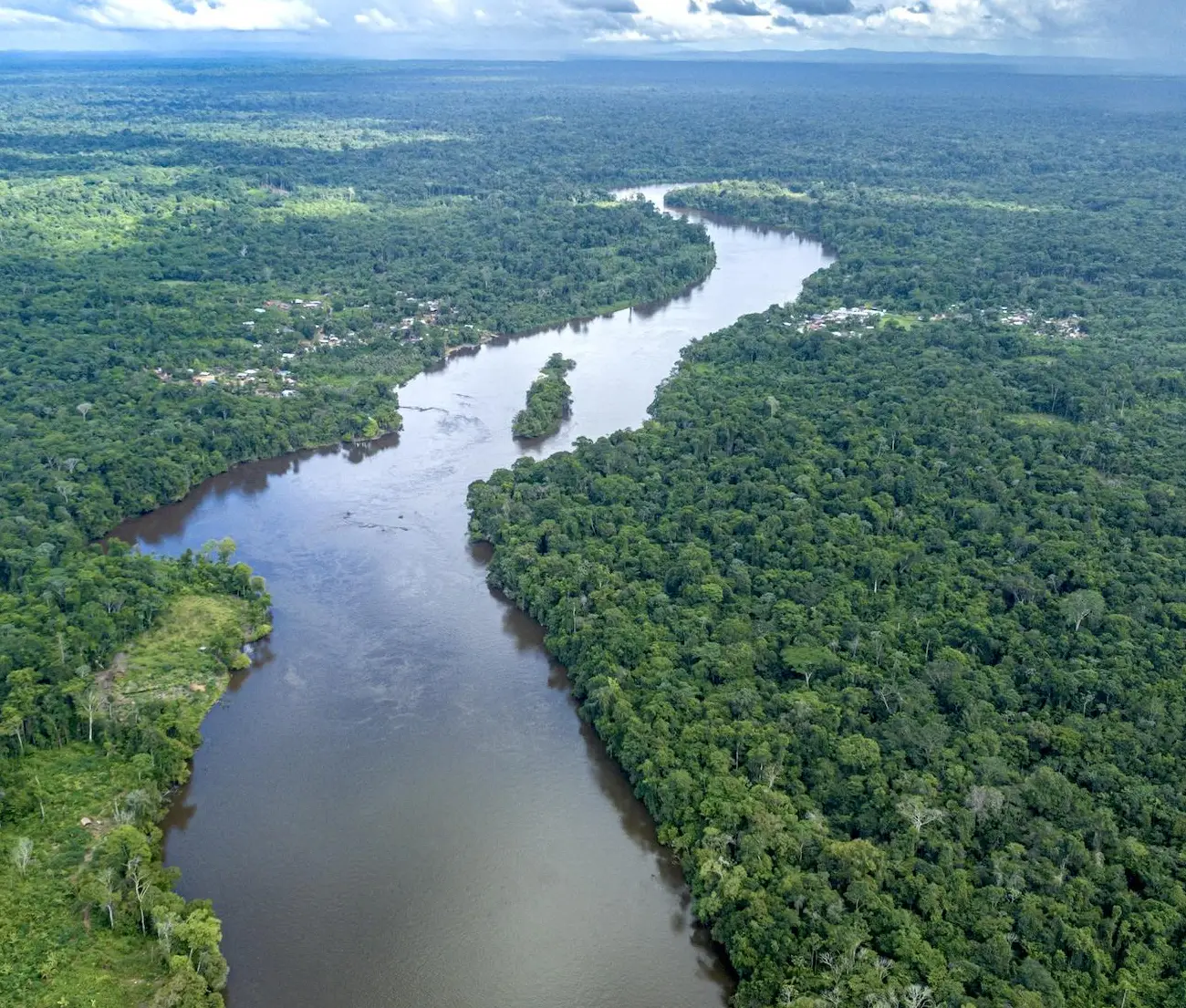
Land near access corridors, riverfront and waterfront positions, commercial nodes, industrial routes and emerging development zones may become increasingly relevant as activity expands. In markets like Suriname, value is rarely created by size alone. It is created by the combination of title, access, infrastructure potential, surrounding development, zoning logic, scarcity and timing.
Natural resources remain another important part of the picture. Gold continues to hold strategic relevance globally. The World Gold Council reported that total Q1 2026 gold demand, including OTC, reached 1,231 tonnes, with the value of quarterly demand rising to a record US$193 billion. Central banks bought 244 tonnes on a net basis in Q1, and the Council’s 2026 central bank survey found that 89% of respondents expect global central bank gold reserves to increase over the next 12 months.
Suriname already has a meaningful gold sector, but this is also where discipline matters. Responsible capital will increasingly distinguish between informal opportunity and investable opportunity. Legal structure, concession status, environmental considerations, community impact, documentation and operational credibility are no longer optional. They are the difference between speculation and an institutional-grade mandate.
This is particularly relevant because transparency and governance remain part of the investment equation. EITI has noted disclosure gaps in Suriname’s extractive sector reporting, including mining revenue transparency issues, which reinforces the importance of structured due diligence and trusted local guidance.
The broader development question is equally important. The IDB has described Suriname as approaching a defining moment, with offshore oil and gas revenues expected from 2028 and the potential to transform the economy if supported by stronger institutions, infrastructure, skills and sustainable development.For investors, this creates a narrow but compelling window: before the full impact of the energy cycle is visible in pricing, infrastructure demand and land competition.
Suriname should not be viewed as a simple “oil boom” story. A more accurate reading is that Suriname is an under-positioned hard-asset market entering a new phase. Energy may be the catalyst, but the broader opportunity sits across land, logistics, resource-linked assets, waterfront positioning, commercial real estate and development corridors.
The best opportunities will not always be publicly marketed. They will require local access, discretion, documentation review and a clear understanding of how land and resources connect to long-term economic change.
At Terra Vireo Group, our focus is on curated access to land, natural resources and development opportunities in Suriname. We work selectively, with an emphasis on discretion, strategic positioning and investor relevance. Full materials are shared upon review.
Suriname is not without complexity. But for investors who understand timing, scarcity and responsible execution, complexity can be where opportunity begins.